
Principles#
What’s expected of both Players and GM to play FROTH as intended.
Player Principles#
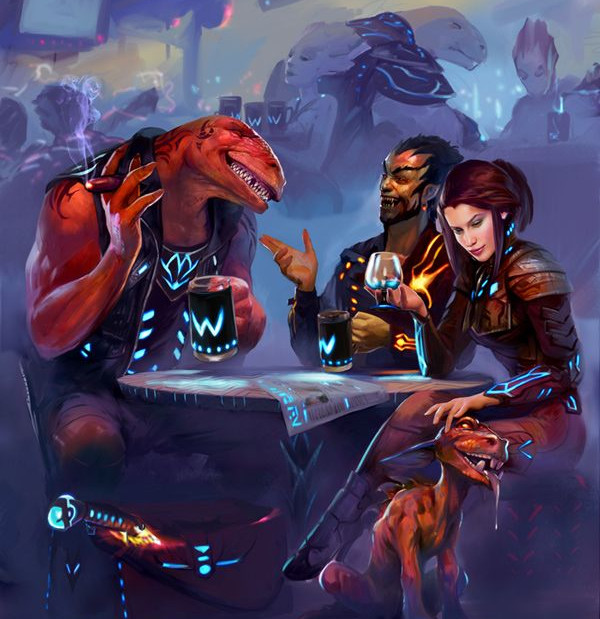
art © Ilya Komarov#
Be proactive; seek to fulfill objectives on your own. Don’t wait for the GM to give you a mission or a “call to adventure”; you can come up with something on your own. Think of what your character wants, or if they are okay with the current situation around them. Try to act proactively; think of how to change things to better suit their needs.
Roleplay your character from their personality, desires, needs and flaws. That is what “role-playing” is about: putting yourself in the shoes of someone else. Think of your character: What do they want? What do they need? How do they usually act in order to get closer to those objectives or ideals? And also, what are their traits that might get them in trouble, or that they should grow out of, over time?
Don’t hog the spotlight; share it with the other players. In any good story, “character screen time” should be somewhat balanced. Each of the player characters are protagonists in this game, so make an effort to leave space for others to participate in the fiction as well. Sometimes your character might be the star of a scene, and other times they might provide support for another one to shine.
Prod at the world, ask questions, be a fan of the game. Try to picture every scene in your head. Ask the GM for more details about something that might not be too clear. Inquire about the background of something you stumble upon: maybe your character knows about it. Maybe they don’t, which might pose a mystery. Before acting, don’t hesitate to ask follow-up questions to understand more about the situation and be on the same page as the GM and the other players.
Trust in the GM, embrace any curve-balls and say “yes, and…”. This is a “high-trust game” in which the GM has their own Principles to follow. Their objective is to be sincere and impartial, so if they throw something at you that seems unfair, consider that they might be doing it to make a more interesting narrative or a more dramatic obstacle. Try to accept these challenges as part of the game, focusing on how to solve them as a group.
Separate player knowledge from character knowledge. As a player, you have a birds-eye view of the fiction. Some groups act more like a “writer’s room”, thinking of how to inject more drama into scenes, even though that might go against the needs or desires of their characters. Other groups prefer to put themselves into “first person” from the senses of their characters, and let the GM infuse adversity and conflict. Both methods are fine, but you should separate what you know and want, from what your character knows and wants. Roleplay your character from their point of view, even when you, as the player, know what they are doing could be detrimental to their plans.
Game Master Principles#
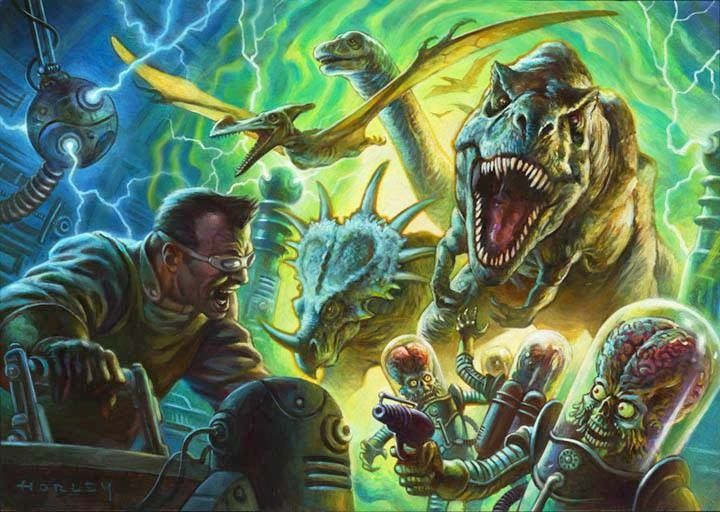
art © Alex Horley#
Play worlds, not rules. Game mechanics should never prevail over in-world logic or genre tropes. Don’t get hang up in new rulings or systems to simulate unnecessary things; just follow the internal logic of the world, and your gut, using the basic rules provided by this game.
Either failure or success should move the story forward. Don’t fall into the trap of “nothing happens” after a roll. Make it count. Make it change the state of the narrative one way or another. If necessary, wrap many actions into a single roll, to give it more gravitas. Be a fan of the characters, but be fair and impartial. As the GM, you should want to see the characters do cool stuff and get out of trouble as any other spectator, but it is also your job to be the judge. Be impartial and don’t hesitate to increase difficulty often. Let them deal with it. It is okay if they fail from time to time; we also want to see our heroes fall and then get back up. The GM plays as “the world”, and it should be neutral towards the characters.
Sometimes, disclaim decision making. Every now and then the GM can ask the players to come up with background information or to describe something of the world. Perhaps the GM wants to guide their answers with leading questions, aiming for a specific outcome while leaving the description to their imagination, as a collaborative endeavor.
Think offscreen too; the world keeps running in the background. Try to avoid having everything happening around the characters only. Make things change when they get back somewhere, don’t let them stay exactly the same as when they left. Make their actions (or those of other factions) impact the world and change it over time. Make it feel alive.
Impossible or Trivial actions don’t require rolls; they just fail or succeed. Specially if there is no risk involved, the GM should just adjudicate what happens. The same goes with extremely rare or outright impossible attempts: don’t let a character roll, just say it automatically fails. This could come into play if a character accumulates too many beneficial or detrimental circumstances for a single action, making its result obvious.
Always declare (or brainstorm) risks before rolling. You can ask the players what they think might happen in case of failure. You don’t have to be too specific about it, but you also shouldn’t blindside someone with a bad outcome they weren’t expecting at all. Try to be as transparent as possible; If you have to choose between surprising them with a twist that might be a bitter pill to swallow, or just telling them the requirements and consequences, go for the latter.
Conflict generates drama: put characters in the spot; let them solve it. No Conflict means no drama means dull stories. Don’t hesitate to throw curve-balls to the characters, put more obstacles in their path that they were expecting, or make situations harder by increasing the difficulty of their actions. Make them work for it, they’ll be happier when they achieve something that feels their own win.
Manage the spotlight; give everyone their time to shine. There is no initiative system, turns or rounds in this game. The GM describes a situation and the players say what their characters say or do. Your work here is like that of a director; you want to give everyone their time, moving from one to the other. If they split into groups, you can leave one in a cliffhanger and go back to the other. It takes practice but it is very rewarding when it feels cohesive and no one needs to wait too long to act or feels left out.
Play to find out what happens: don’t plan ahead; let them surprise you. Roleplaying games work best when the collective imagination of the whole group is free to improvise. As a GM, you can prepare situations or setpieces that might appear in the story, but you shouldn’t try to force them in (let alone impose a whole plot or structured story; those never work without feeling “railroady” to players). It is best to have some ideas beforehand without commiting too much to them. “Draw maps, leave blanks” means you can prepare places, background situations or states, but leaving room for the characters to act and decide which way to go or what course of action to take. You, as the GM, can also be surprised with the outcome of the story, which is oftentimes more fun than knowing every detail and possibility.